The Olympics, Maps and Alaska

John-Estle-P1010035.21

When this segment aired on KUAC, the Olympic Winter Games were days from begining in South Korea. Fairbanks and Alaska were well represented in cross country skiing. Half of the 20 members Nordic ski team was either Alaskan or Alaska-based.  Arguably, the best-known Alaskan is Kikkan Randall. The 35 year old is seeing her fifth Olympic contest, the most ever for a U.S. Cross Country athlete. Alaskans were also represented on the coaching staff, including cross country coach Jason Cork from North Pole.

Given the rich talent Alaska is contributing to the games this Winter, I turned to former Nanook and US Head Ski Coach John Estle to help preview the games and discuss some of the athletes. As you’ll hear, John has enjoyed a rich and multifaceted connection with the Olympics.

Also, I was recently in another country with a tour group. We were trying to get to a destination not far away, but none of us had a physical map. What we did have were smart phones. In seconds several people had called up, the address, the best route to get there and some of the apps provided coordinates.

Given the state of our technology, we may be inclined to hardly give maps a second thought. But in another segment in recurring series saluting northern explorers, University of Alaska Fairbanks scientist Matthew Sturm thinks that’s devaluing a hard-won ability.
 

North to the Future: eLearning

Carol Gering

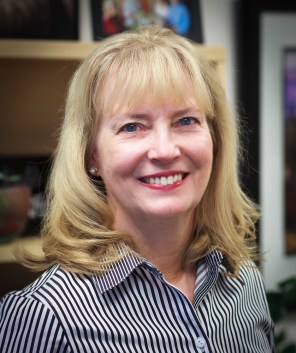
UAF eLearning Director Carol Gering

Alaska adopted the motto “North to the Future” in 1967 to observe the centennial of the state’s purchase from Russia. It underscored the general optimism at the time that Alaska represented a place of opportunity. But the region’s sprawling geography has always posed a challenge to educators. That’s less of a concern these days.  The internet has opened up new possibilities to traditional as well as distance education. Dr. Carol Gering heads up the University of Alaska Fairbanks’ E-learning and Distance Education unit. She talks about the changing dynamics and opportunities technology presents educators and students.

And on this episode the Institute of Arctic Biology’s director Brian Barnes discusses over-wintering strategies of Alaskan animals.

And katexic clippings‘ Chris Lott riffs on the term “gamification.”

International Relations: Brandon Boylan

Brandon-selfie-2014

Brandon Boylan – Courtesy of UAF

Julie and I took a trip to Costa Rica in late January and early February. That has delayed my posting of recent episodes. Look for them to appear on a daily basis until I’m caught up with my radio show.  Today’s offernig, though, seems like an “evergreen,” as we say in broadcast journalism.

Hawaii’s missile scare underscores the growing anxiety in the United States about the war-like rhetoric being exchanged between President Donald Trump and North Korea’s Kim Jong-un. The recent Olympic Winter Games, don’t seem to have dampened Washington’s bellicose rhetoric, either. Added to the mix is the plan to cut state department personnel and the inability of the Trump administration to fill key ministerial posts. Finally the withdrawal by the U.S. from earlier negotiated treaties, including on climate change, have elevated concerns around the globe. My two main guests this episode address key aspects of U.S. foreign policy. I got the idea for the program when I spied UAF political science professor’s Brandon Boylan’s flyer about his international relations class. Boylan is also Associate Director of Arctic and Northern Studies. As we began our discussion, I learned it was international conflict that drew him into political science.

Later in the show I talk with Northern Soundings regular Cary de Wit. Cary is a geography professor at the University of Alaska Fairbanks. As we heard from Brandon Boylan, there are various ways of evaluating international relations. One of the countries that has dramatical increased its geopolitical clout is China. I invited Cary to discuss the country’s rise in wealth and power.

And Chris Lott of katexic clippings explores an emerging term in international debate.

Beavers and Raven

RavenCrossCountry

When I first arrived in Fairbanks in the early 1980s, I had a small dry cabin off Noyes Slough. One summer night, having trouble sleeping, I went onto the porch overlooking the water.  It was peaceful and soothing until I heard something shifting in the heavy brush below. I looked down and into the eye of the terrier sized animal. I’d never encountered a beaver before and I thought it was some strange mutant rat. Apparently, it was as dismayed and startled as I because it quickly turned and returned the slough with a tail slap. That’s when I realized what I’d witnessed.

My first guest on the show today is far more experienced and knowledgeable about Alaska’s flora and fauna, but I think he might agree the beaver is a startling critter. Ken Tape is a research ecologist at the University of Alaska Fairbanks. He and his team recently presented findings that raised a few eyebrows.  It also landed him in the New York Times. It turns out beavers are rebounding from past trapping and making their way out on to Alaska’s northern tundra and transforming the landscape. As Tape explained to me it’s part of a sequence of changes he and other researchers tie to climate change.

-O-

Also on the show: about seven years ago I went through something of a mid-life crisis. Instead of a Maserati I ended up buying a pair of Nordic skis and started lessons. From that happy move a chain of events led me to Fred Raymond and his small ski and bike store, Raven Cross Country. For many athletes in the interior, what Fred’s shop lacked in cubic feet, was more than compensated by his craftsmanship, knowledge and friendly personality. He never tried to press you in a sale and he was always ready to answer questions. When you got a bike back from repair or a pair of skis from waxing, you knew they were done right.

Over the years I would often use the pretext of a question to just spend some companionable time in his store. I wasn’t alone. I would often find several people ahead of me, talking about an upcoming race or discussing trail conditions.

After 15 years, Fred closed Raven Cross Country just before Christmas. He is now retired. Before the closing, I sat down with him to talk about his background, how he came to be a shop owner and what brought him to Alaska. I began by asking him if he had always been handy with tools.

And the beaver has made its mark on the literary landscape. Chris Lott shares his finding on this week’s katexic clipppings  .


Of Rabies and Resilience

OLYMPUS DIGITAL CAMERA

Last year University of Alaska Fairbanks researcher Karsten Hueffer and his team reported they had determined how the rabies virus makes its way to hosts’ brains. When I talked with Hueffer at the time, I learned the rabies virus holds a unique fascination for many researchers. It consists of only five genes, yet it manages to hijack and modify the behavior of much more sophisticated animals, including humans. I began our discussion trying to get a handle on the virus’ size.

-0-

Well, it is a new year and if you are like me you are staring down some resolutions you made in a euphoric haze of champagne. Exercise is often one of vows we make to ourselves after a season of snacking and heavy meals, but at this time of year, Alaska provides plenty of excuses for not getting to the gym or even walking around the block. My next guest has heard most of those excuses. Corrine Leistikow, MD is a family medicine physician at Tanana Valley Clinic. She is also a distance athlete of some note. She and her husband Eric Troyer regularly compete in ski and bike races measure in tens, if not the hundreds of miles.  What many people may not know about Leistikow is that for decades she has battled a painful disease. Also, she recently had both her knees replaced. Those conditions haven’t slowed her down and she can still be found enthusiastically participating in races. I decided to begin an occasional series on Northern Soundings that salutes resilience. I began my conversation with Leistikow by asking if she grew up in an athletically engaged family.

-0-

And Chris Lott at katexic clippings provides a thoughtful word to turn to as you work out this season.

Microbial Worlds: Art of the Microscopic

Screen-Shot-2017-04-11-at-3.10.44-PM-163x300

I once read a book by a microbiologist who said he rarely told his students, and was even less forthcoming in casual conversation, about his view of the world. He says if we could see microscopically, we would observe a world seething – every surface pulsating with microbes. It is disquieting perspective. I understand his reticence.  But University of Alaska Fairbanks microbiologist Mary Beth Leigh, far from cloaking it, celebrates her vision collaboratively in art. Besides being a scientist, she also is a cellist and a dancer. She helped found a series called In a Time of Change that draws together other artists to depict the natural world around us, making the inaccessible or unseen aspects of science intriguing and inviting. The most recent project is Microbial Worlds and it opens this week at Alaska Pacific University’s galleries in Anchorage.  As you’ll hear, the ability to appreciate, let alone observe, the rich variety of life at very small scales is relatively recent in human history.

-0-

This Friday, two researchers team up to talk about the Naval Arctic Research Laboratory in Utqiaġvik, or Barrow. The talk is sponsored by UAF’s Osher Lifelong Learning Institute  Dave Norton studied tundra ecology at NARL, as it is known. And Hajo Eicken is Director of the International Arctic Research Center at UAF. Established in the late 1940s, over the years NARL played an important role as a platform for Arctic research. But as I learned when I talked to Norton, NARL also had strategic value in the Cold War between the former Soviet Union and the United States.

-0-

Before it was a backdrop for geopolitics, the Arctic icecap drew the adventurous seeking to be the first to reach the North Pole. Many us grew up believing Robert Perry won that distinction, but as snow scientist and author Matthew Sturm tells us, the draw for fame and fortune led two men to tarnished claims.

Libraries: Bastions of Real News

nwl_bldg_2015_1a

This year marked the Fairbanks North Star Borough Noel Wien Library’s 40th anniversary. The library, as a Fairbanks institution, goes much further back to a log cabin on 1st Ave. founded by the Episcopal Church. But the main building that currently serves as a library was opened four decades ago. And the librarian who helped spearhead the project returned to participate in the celebration.

-o-

The subtitle of this show is Alaska in Conversation. It reflects my belief in the power of earnest conversation to draw us closer as a community and to achieve greater understanding about the challenges before us.

As it happens, those beliefs are shared by William Schneider, Professor Emeritus of the University of Alaska Fairbanks. Bill, as he is known, is also responsible for starting Project Jukebox at UAF’s Elmer E. Rasmuson Library. The project continues the tradition of oral history you heard my first guest, Patsy Gavin, discuss. But it goes one step further by providing internet users access to many of the historical recordings.

-o-

This episode, I’ve been celebrating libraries as bastions of dependable information. That got katexic clippings’ Chris Lott thinking about branding.

-o-

And finally, as we draw towards the end of 2017 and the year’s final episode of the show, I wanted to share a subject we’ve debated in the KUAC newsroom. This year seemed to produce a bumper crop of anniversaries that organizations held up for celebration. So, I turned to KUAC’s Math Guy John Gimble.  John is actually a mathematics professor at UAF, and he has a way of making the numbers make sense. I asked him what was behind the confluence of anniversaries.

Nick Jans: Summing Things Up

Nick Jans

Many people are familiar with the name Nick Jans. For more than 25 years he’s written about his experiences in various parts of the state for Alaska Magazine. From those essays and other experiences, he’s published 12 books. A recent work A Wolf Called Romeo captured a slot on the New York Times Best Seller list. A long time back, I  interviewed Jans when he came out with his first book, The Last Light Breaking. It described and celebrated his life in the village of Ambler in the Northwest Arctic Borough. His latest book also reflects on the region, but with a different sensibility, as you will hear when he opens the program reading an excerpt from The Giant’s Hand

Also on the show, I debriefed Ned Rozell about his hike along the Trans-Alaska Pipeline corridor… again. Ned is a science writer at the University of Alaska Fairbanks Geophysical Institute and the author of Walking My Dog Jane, the story of his first hike along the 800-mile pipeline 20 years ago.

And katexic clippings’ Chris Lott follows the scent to the etymological roots of the word “wolf.”

Fairbanks Trails: Creators and Preservers


XC Skiers Crosson Family Papers, University of Alaska Fairbanks Archives.

This year marks the 50th anniversary of the Nordic Ski Club of Fairbanks. That prompted me to salute Fairbanks trails this episode. The club, and others like Running Club North and Fairbanks Cycling Club put a lot of effort into developing and maintaining world-class trails. Former Lathrop High School coach Jim Whisenhant was instrumental in helping develop the trails at Birch Hill where they are named in his honor. But he also had a hand in improving the trail system Ivan Skarland set in place at the University of Alaska Fairbanks.

As the above image from the University of Alaska Fairbanks Elmer E. Rasmuson Library archives reveals, Fairbanks supported a Nordic Ski community in the 1930s. I’ll talk to Jim Whisenhant’s son Greg about the early days of trails and skiing in Fairbanks. I also talk with Stan Justice who organizes a ski race on the UAF trails that hearkens back to the early Whisenhant days.

Also on the show – filmmaker Leonard Kamerling discusses the process of restoring and creating a digital version of the award-winning documentary “The Drums of Winter.” Kamerling is also the curator of film for the University of Alaska Museum of the North.

And Chris Lott of katexic clippings examines how the word “marathon” has stayed the linguistic course.

Russia: A Tangled History

21384fe3bfa49f2051fb3086fdb489c8

In this episode, Frank Soos discusses a key figure in modern literature, Anton Chekhov, and geographer Cary de Wit puts the current headlines on Russia in an historic and economic context.

But I begin with a discussion I had with former Fairbanks Daily News-miner reporter David Ramseur. He’s come out with a book that tracks the events surrounding the opening of the former Soviet Far East to Alaskans. Melting the Ice Curtain: The Extraordinary Story of Citizen Diplomacy on the Russia-Alaska Frontier is published by University of Alaska Press. Ramseur, as you’ll hear, was in a key vantage point to observe and even aid the developing relations between Alaska and Russia. After he left journalism Ramseur joined the administrations of two Alaskan Governors. I began our discussion by asking him about his childhood.